

Does Home Insurance Cover Natural Disasters in Florida?
Updated October 2026
Quick answer: A Florida homeowners policy usually covers hurricane wind damage after your hurricane deductible, unless the policy excludes wind. Flooding and storm surge are not covered and need a separate flood policy. Every Florida policy must cover a catastrophic ground cover collapse, while broader sinkhole coverage costs extra.
Whether your home insurance covers a natural disaster depends on what caused the damage. In Florida, the difference between wind and water, or between a sinkhole and ordinary settling, can decide whether a claim is paid. This guide explains what a typical Florida homeowners policy covers, what it leaves out, and the Florida rules that apply, with sources at the end.
What a homeowners policy usually covers
Most homeowners policies cover sudden damage from:
- Wind and hail, including hurricane winds, subject to the hurricane deductible described below.
- Lightning and the fire it causes.
- Fire and smoke, including wildfire.
- Catastrophic ground cover collapse, which Florida law requires every property insurer to cover (see the sinkhole section).
What is covered, and for how much, depends on your policy form, your limits and your deductibles. Your declarations page and policy wording are the final word.
What it usually does not cover
- Flood, including storm surge, rising water from heavy rain and overflowing rivers or lakes. This needs a separate flood policy.
- Sinkhole loss beyond a catastrophic ground cover collapse, unless you add sinkhole coverage.
- Wear, tear and poor maintenance, and damage that happens slowly over time. A storm that damages a sound roof is a different claim from a roof that was already failing.
Hurricanes and the hurricane deductible
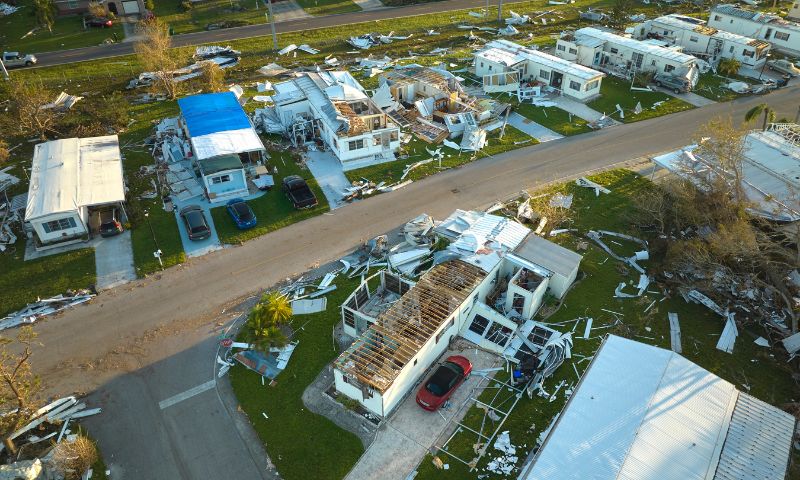
Hurricane damage to your home from wind is normally covered, but a separate hurricane deductible applies. Some Florida policies, especially near the coast, exclude wind entirely, so wind coverage has to come from a separate policy. Your declarations page shows whether wind is included. Under section 627.701, Florida Statutes:
- Insurers must offer hurricane deductible options of $500, 2 percent, 5 percent and 10 percent of the policy's dwelling limit (some higher-value homes have different required options).
- The hurricane deductible applies once per calendar year, not once per storm, for policies with the same insurer or insurer group. If a second hurricane hits in the same year, the deductible for that storm can be the remaining amount of the hurricane deductible or your regular deductible, whichever is greater.
- The insurer must show the actual dollar amount of your hurricane deductible on the declarations page.
A percentage deductible is based on your dwelling limit, not on the size of the claim. On a home insured for $300,000, a 2 percent hurricane deductible is $6,000. Find that dollar figure on your declarations page before storm season.
Water that a hurricane pushes inland as storm surge is flood, not wind, and is not covered by a homeowners policy. Our Florida hurricane season insurance checklist walks through what to review before a storm, and our hurricane insurance page explains wind coverage in more detail.
From Bryson Ritz, licensed Florida agent: Most homeowners don't realize their hurricane deductible is usually a percentage of their Coverage A, the dwelling limit on their policy, and on many homes that can run into the tens of thousands of dollars. The worst time to find out is during a claim. Check your declarations page today, and give us a call at (352) 512-6334 if you have any questions.
Flood insurance
According to FloodSmart, the National Flood Insurance Program's site, most homeowners insurance policies do not cover flooding. Flood coverage comes from a separate policy, through the National Flood Insurance Program (NFIP) or a private flood insurer.
- An NFIP policy normally takes effect 30 days after you buy it, so it cannot be bought once a storm is on the way.
- There is no wait if you buy it while making, increasing, extending or renewing a mortgage, and FloodSmart lists a few other exceptions.
- Federal disaster assistance is only available after a presidential disaster declaration, and most floods do not get one.
Sinkholes in Florida
Florida treats sinkholes differently from other states. Under section 627.706, Florida Statutes:
- Every property insurer must cover a catastrophic ground cover collapse. That means all four of these happen: the ground collapses abruptly, there is a depression clearly visible to the naked eye, the building has structural damage including the foundation, and a government agency condemns the building and orders it vacated.
- Broader sinkhole loss coverage must be made available for an additional premium. The insurer may inspect the home first, and the policy may have a separate sinkhole deductible of 1, 2, 5 or 10 percent of the dwelling limit.
- Settling or cracking of a foundation alone is not a catastrophic ground cover collapse.
After a disaster: filing a claim
- Report the claim promptly. Under section 627.70132, Florida Statutes, a new or reopened property claim is barred unless notice is given within 1 year after the date of loss, and a supplemental claim within 18 months.
- Photograph and video the damage before you clean up or make repairs.
- Make reasonable temporary repairs to stop further damage, such as covering a roof opening, and keep every receipt.
- Keep a written record of every call and visit with the adjuster, including dates and names.
Review your policy before storm season
- Find the dollar amount of your hurricane deductible on your declarations page.
- Decide whether you need flood insurance, and remember the 30-day wait.
- Check whether you have sinkhole loss coverage or only catastrophic ground cover collapse coverage.
- Make sure your dwelling limit reflects what it would cost to rebuild your home today, not its market value.
- Keep a current photo or video inventory of your home and belongings.
Roof age and inspections also affect Florida home insurance. See our guide to roof age, 4-point and wind mitigation inspections.
Frequently asked questions
Does homeowners insurance cover hurricane damage in Florida?
Wind damage from a hurricane is normally covered, after your hurricane deductible. Flooding and storm surge are not covered by a homeowners policy and need a separate flood policy.
Is flood damage covered by homeowners insurance?
Most homeowners policies do not cover flooding. Flood coverage is a separate policy, and an NFIP policy normally takes 30 days to start.
Are sinkholes covered in Florida?
Every Florida property policy must cover a catastrophic ground cover collapse. Broader sinkhole loss coverage is available for an additional premium.
How long do I have to file a claim in Florida?
Notice of a new or reopened property claim must be given within 1 year after the date of loss, and a supplemental claim within 18 months.
This article is general information, not legal advice, and it does not describe what any particular policy will pay. To talk through your coverage with a licensed agent, see our page on home insurance in Ocala, FL or call (352) 512-6334.
Sources
- Florida Statutes, section 627.701: Liability of insureds; coinsurance; deductibles
- Florida Statutes, section 627.706: Sinkhole insurance; catastrophic ground cover collapse; definitions
- Florida Statutes, section 627.70132: Notice of property insurance claim
- FloodSmart (NFIP): What is a flood?
- FloodSmart (NFIP): Buy a flood insurance policy